

Beat 343 of my DrumBeatProject 7.14.26. The rhythm for this one popped into my head when I was walking in Virginia Beach on the last Wilco tour, so when I got back to The Dome, I worked it out (orchestrated it) backstage. See the videos behind the paywall.
Later, I went to stage to record it (clips 3 & 4). I also tried it onstage in Wheeling the following day and it locked in a bit more (clips 1 & 2). I decided to post this one mainly because I really like the hi-hat part - played with the left foot & using a custom Greg Keplinger jingle attachment (more on that below). It provides a rhythmic punctuation line on top of the ‘patternistic’ beat underneath. That’s the other reason I chose this one, my love of pattern beats (which are distinctive from linear beats imo). Think Ringo’s part on “Come Together” or Neil Peart’s part on “Mystic Rhythms”. Not the most popular Rush song, but that pattern approach left an indelible mark on my drumming in high school (as did “Tom Sawyer” & learning to play in 7/8 time too). I started creating these types of beats in songs for my high school rock band and loved playing them, so I never stopped. A good Wilco example are the choruses to “Deeper Down” & several other examples are in this project as well (all are up on my website under the “projects” tab).
Technically, only the second half of this one (if you think of the beat more as a measure of 2/4 + a measure of 3/8 than being in 7/8) is a pattern beat. The first four counts feature a floor tom ride and are more traditional/ backbeat oriented. In the first clip, I’m using traditional grip, in the second, matched grip. The third clip is without the hi-hat jingles and the fourth is a close-up of the hands part.
I’ve never been a fan of modern, stock tambourine jingles. To me, they just sound too bright and thin and toyish. I love the sound of the tambourines on Beatles and Rolling Stones records. They’re beefier, darker and thicker - there’s just more personality. That’s why I use different types of jingles on anything new. Luckily, Meinl has a tambourine with better jingles, that’s what I use mounted on my Wilco kit. I also have a few super cool new Black Swamp tambourines with very funky and dark jingles. But for all of my hi-hat attachments (I use three: single row, double row and small circular strikeable), my old tech, Ashwin Deepankar, had the jingles replaced with home-made, hand hammered jingles by Seattle based instrument builder, tech and amazing drummer, Greg Kepplinger. I love those.
I use these attachments for a few reasons. One is to cover a tambourine part live from the recorded version of a song. So I make it part of the drum beat and play it with the left foot (“I Might” is a great example of this). Other times, I just want the hi-hat part to be more pronounced and better heard, so augmenting it with jingles or rattles does the trick. And lastly, sometimes those additions just add a nice timbre when riding on the hats - residual shakes and rattles that work nicely with the music.
I feel strongly about this as does my long-time duo partner, Darin Gray. We’ve had a rule for over 25 years in our band, On Fillmore, that we’re not allowed to use any store bought sounding percussion - or new percussion that sounds mass produced and has zero mojo. Instead we’ve used loads of ethnic percussion from around the world as well as customized and home-made percussion.
I do have a few “A-list” recording tambourines that I use on everything. One is a vintage tambo from Pakistan that was the house tambourine at Sear Sound in NYC where “A Ghost Is Born” was recorded and “Sky Blue Sky” was mixed. That tambourine is double row with no head and sounds just like the ones on those old 60’s recordings that I mentioned. I’m so happy that was given to me, it’s on everything after “Ghost...”. There’s also a super cheap one that I bought in Turkey 25 years ago as well as several vintage ones and a few headed, orchestral tambourines with distinctive jingles. I’ll do a whole post on those sometime when I’m off the road for a bit.
This next video is just an alternate take
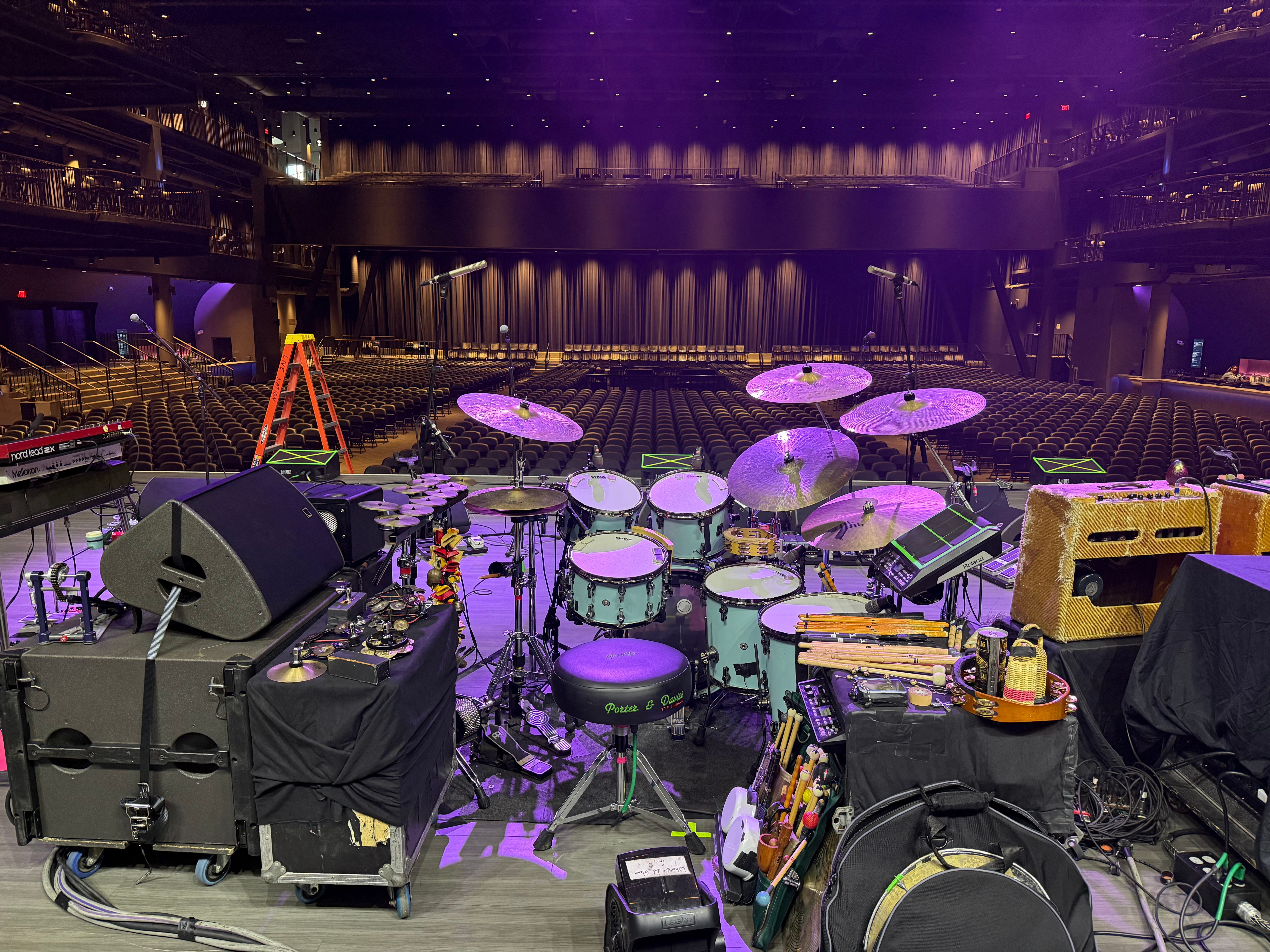
And my view from the stage of The Dome
You might need headphones, but I thought I’d include this video showing how it sounds for me with my monitors off:
And here’s a video of what it sounds like on stage if my audio monitors on - again you might need headphones to really hear the difference. Also, keep in mind that I use a thumper attached to my drum stool so I can actually feel the vibrations of the bass drum and toms in my seat. I do this because getting that information allows me to reduce the need for those low, long sound waves in my monitors - which in turn cleans up the stage sound. With fewer long, deep sounds floating around the stage, it’s easier for everyone to get more definition in their stage sound.
Thanks for listening - and if you want a glimpse of how these beats typically develop, venture below for a series of videos made while I was creating and working up this one. Enjoy!


